
General information only. This article isn’t accounting, tax, legal or financial advice, and reading it doesn’t create a CPA–client relationship. Readers use it at their own discretion.
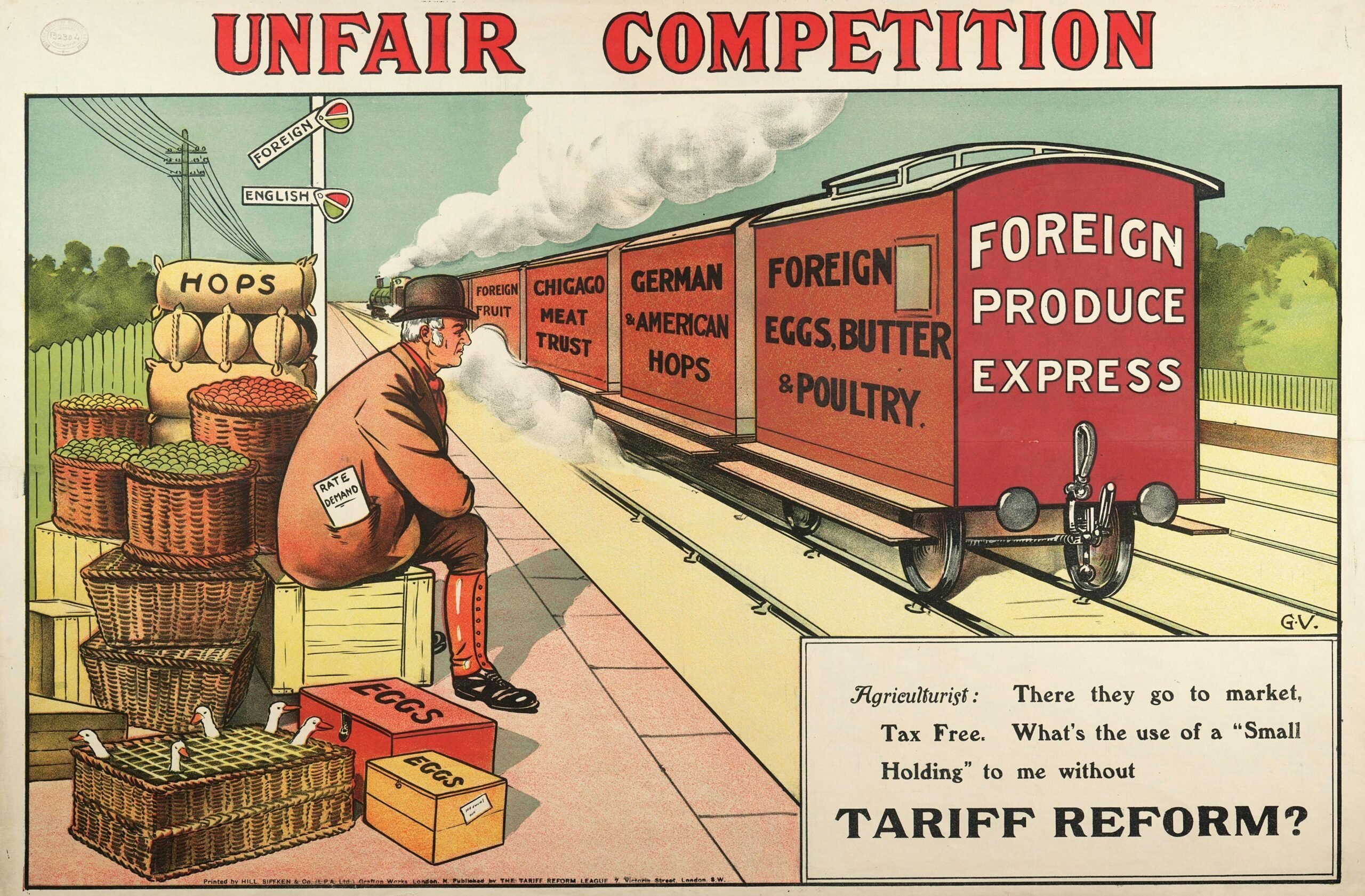
A tariff is a tax on imported goods, paid when the goods enter the country. U.S. tariff policy changed several times in 2025 and 2026, including a Supreme Court decision in February 2026. This post covers what tariffs are, why governments use them, what happened in 2025 and 2026, and how tariffs reach business costs and prices.
What a Tariff Is
A tariff is collected by U.S. Customs and Border Protection from the importer of record, the business bringing the goods in, when the goods cross the border. Two common kinds:
- Ad valorem tariffs: a percentage of the item’s value, for example 10%.
- Specific tariffs: a fixed amount per unit, for example $1 per item.
Why Governments Use Tariffs
- Revenue: customs duties are a source of government income.
- Protecting domestic industries: a tariff makes imports more expensive than locally made goods.
- Bargaining: tariffs are used in trade disputes, to respond to another country’s practices or to press for market access.
- Strategic goals: encouraging manufacturing at home and securing supply chains for goods like semiconductors and medical equipment.
A Lesson From 1930: Smoot-Hawley
The Smoot-Hawley Tariff Act of 1930 raised U.S. tariffs on thousands of imported goods. Other countries responded with their own tariffs, and world trade fell sharply during the Great Depression. Economists generally don’t see it as the main cause of the Depression, but it is the best-known example of a tariff fight spreading.
U.S. Tariffs in 2025 and 2026: A Timeline
- 2025: the President imposed broad tariffs under the International Emergency Economic Powers Act (IEEPA), including “reciprocal” tariffs on most trading partners and tariffs on China, Canada and Mexico.
- February 20, 2026: in Learning Resources, Inc. v. Trump, the Supreme Court ruled 6–3 that IEEPA does not authorize the President to impose tariffs. Collection of the IEEPA tariffs ended on February 24, 2026.
- February 24 to July 24, 2026: a temporary import surcharge of 10% under Section 122 of the Trade Act of 1974, on most imports, with some product exemptions. Section 122 allows a surcharge of up to 15% for up to 150 days unless Congress extends it; it was not extended.
- July 24, 2026: new tariffs under Section 301 of the Trade Act took effect on imports from 60 economies (about 99% of U.S. imports), based on those countries’ rules on goods made with forced labor. The general rates are an additional 10% (17 economies) or 12.5% (the rest). For certain products from the EU, Japan, Korea, Taiwan and Switzerland, the rate is figured net of the regular (MFN) duty, and some products are exempt, so the added duty depends on the product and the country.
- Throughout: tariffs under Section 232 (national security, including steel, aluminum and copper) and earlier Section 301 tariffs on Chinese goods stayed in place, because the Supreme Court decision covered only IEEPA.
Refunds of IEEPA tariffs already paid are going through the Court of International Trade. Importers, not their customers, are the parties that paid them.
Who Pays for a Tariff
The importer pays the tariff to the U.S. government. Studies of the 2018–2019 tariffs found that most of the cost was passed on to U.S. buyers through higher prices, rather than absorbed by foreign sellers. From there:
- Higher prices: when a tariff is passed through, the final product costs more.
- Higher cost of goods sold: for businesses that buy imported materials or parts, tariffs raise the cost of goods sold. The business either absorbs the cost, which lowers its margin, or raises its prices.
- Retaliation: other countries often answer with their own tariffs, which makes U.S. exports more expensive abroad.
- Supply chain changes: companies look for new suppliers or change products to reduce tariff costs, which takes time and money.
Where Tariffs Show Up in a Business’s Numbers
- Cost of goods sold: the landed cost of an imported item includes the tariff, freight and customs fees.
- Product classification: the tariff rate depends on the item’s classification code (HTS code), so the same item can carry different rates depending on how it’s classified.
- Margins and cash flow: tariffs are paid when goods arrive, before they’re sold.
EverReachCraft templates that show these numbers: the Product Costing & Pricing Dashboard and the Purchase Order & Vendor Management Dashboard.
The Bottom Line
Tariffs protect specific industries and give a government leverage in trade disputes, and the costs land mostly on domestic buyers, businesses and consumers. In 2026, the legal basis for U.S. tariffs shifted from IEEPA to Sections 122, 301 and 232, and the rates and covered countries changed with it.