

General information only. This article isn’t accounting, tax, legal or financial advice, and reading it doesn’t create a CPA–client relationship. Readers use it at their own discretion.
More than ten years ago, I was a junior in college, interning for a small business owner. On the last day of my internship, the owner asked me a question that has stuck with me ever since:
“I don’t get accrual accounting. Why not just record revenue in QuickBooks when you receive the cash? Isn’t that easier?”
I had just completed my intermediate accounting courses and thought I had a solid grasp of the fundamentals. But when she asked that question, I hesitated.
In that moment, I realized something—I didn’t actually know why accrual accounting was preferable to cash accounting. Logically, her point made perfect sense to me. Cash accounting seemed straightforward: record revenue when cash comes in, and recognize expenses when money goes out. That’s how we handle personal finances—when you get paid, you count it as income; when you pay a bill, it’s an expense. Simple.
But as I advanced in my career, and now with an active CPA license, I came to understand the fundamental flaw in cash accounting: it doesn’t provide the full picture. Accrual accounting, on the other hand, offers a more accurate representation of a business’s financial health by recognizing revenue when it’s earned and expenses when they’re incurred—regardless of when the cash actually changes hands.
For example, let’s say you provide a service on January 15th, but you don’t get paid until February 15th. Under cash accounting, that revenue wouldn’t be recorded until February, when you actually receive the payment. But what if you had significant expenses related to that service in January? Your books would show a misleading picture—an expense-heavy January with no revenue, followed by an inflated February. This timing mismatch makes it difficult to assess a company’s true profitability in any given period.
This is the major disadvantage of cash accounting—it doesn’t align revenue with the expenses incurred to generate it. Accrual accounting solves this by matching revenue and expenses in the same period, giving business owners, investors, and financial analysts a clearer understanding of performance.
A Side-by-Side Example
A business does a $5,000 job on January 15 and pays $2,000 of costs for it in January. The customer pays on February 15.
| Month | Cash method: revenue | Cash method: profit | Accrual method: revenue | Accrual method: profit |
|---|---|---|---|---|
| January | $0 | –$2,000 | $5,000 | $3,000 |
| February | $5,000 | $5,000 | $0 | $0 |
| Both months | $5,000 | $3,000 | $5,000 | $3,000 |
Both methods show the same $3,000 over the two months. The difference is timing: under accrual, January shows the profit the January job earned, and the $5,000 the customer owes appears as accounts receivable until it’s paid.
Which Businesses Can Use the Cash Method for Taxes
Most small businesses, including sole proprietors, can use the cash method on their tax returns. The main limits: C corporations and partnerships that have a C corporation as a partner generally can use it only if their average annual gross receipts for the three prior years are $32 million or less for 2026 ($31 million for 2025); qualified personal service corporations, such as many accounting, law and medical practices, are an exception to that limit. Tax shelters can’t use the cash method. Businesses with inventory have additional rules (IRS Publication 538).
Templates for Both Methods
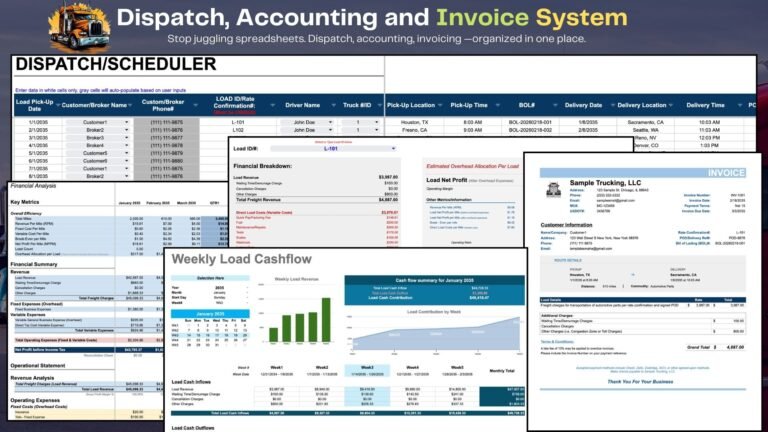
EverReachCraft income statement templates show profit by month, quarter and year. For accrual books, the Accounts Payable & Receivable Dashboard Bundle tracks what customers owe and what the business owes.