
General information only. This article isn’t accounting, tax, legal or financial advice, and reading it doesn’t create a CPA–client relationship. Readers use it at their own discretion.
QuickBooks is general small-business accounting software. It is built around bank feeds, invoices and a chart of accounts with categories like rent and office supplies. An owner-operator’s books revolve around other things: loads, miles, fuel bought in many states, per diem and the quarterly IFTA return. This post covers where the two don’t match, what a bookkeeper does, and the other ways owner-operators keep their books.
What Owner-Operator Bookkeeping Tracks
- Revenue per load, with loaded and empty (deadhead) miles
- Fuel purchases by state, for IFTA
- Cost per mile: what it costs to run the truck for each mile
- Lumper fees, detention and other accessorials
- Maintenance by truck and trailer
- Dispatcher and factoring fees
- Driver pay, when the truck has a driver
Where General Accounting Software Falls Short
QuickBooks has no built-in fields for loads, rate per mile or IFTA fuel by state. Tracking them takes setup: classes, locations or custom fields for trucks and loads (which of these are available depends on the QuickBooks plan), and reports built for trucking.
Factoring adds another step. When a factoring company pays an invoice early and keeps a fee, the deposit doesn’t match the invoice, so each payment is split between the invoice, the fee and any reserve before the bank account reconciles.
What a Bookkeeper Does
A bookkeeper enters and categorizes transactions, reconciles bank accounts and prepares reports, usually for a monthly fee. The bookkeeper works from the documents the owner-operator sends: receipts, settlement statements, fuel card reports and bank statements. Anything that isn’t sent isn’t in the books, so gathering and sending the paperwork stays with the owner-operator.
Tax Time With and Without Organized Books
When a year of records arrives as a bag of receipts and settlement statements, the tax preparer sorts and totals them before preparing the return, and many preparers charge for that extra work. When the records arrive as a profit and loss statement with expenses already in categories, the preparer works from the totals.
A Spreadsheet Built for Owner-Operators
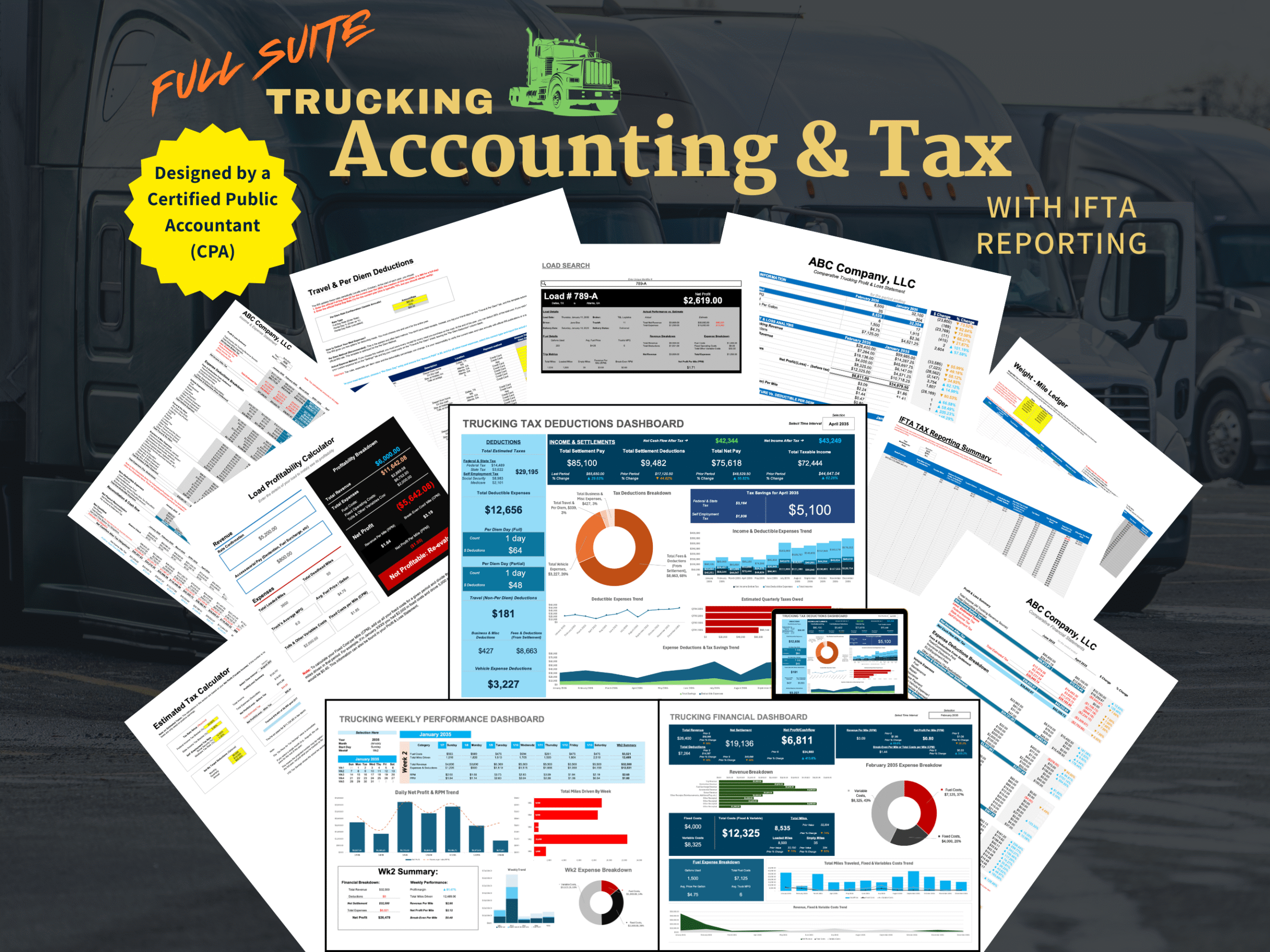
The Full Suite Trucking Accounting & Tax with IFTA Reporting is a spreadsheet for Excel and Google Sheets, designed by a licensed CPA. It includes:
- Tax deductions
- Financial and weekly dashboards
- Load search
- Load profitability and estimated tax calculators
- IFTA summary and weight-mile ledger
It is $79.99, a one-time price. The Full Suite Trucking Accounting & Tax – No IFTA is the same system without the IFTA, weight and mileage sheets, for $64.99.
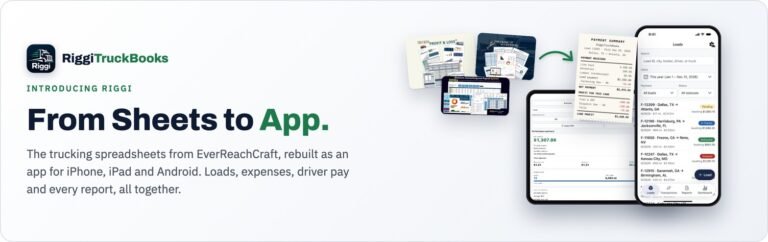
For bookkeeping on a phone or tablet, RiggiTruckBooks is EverReachCraft’s app for iPhone, iPad and Android (on the App Store and Google Play). It records loads, expenses and fuel, and its dashboard shows profit, margin, revenue and cost per mile.
Comparing the Options
| Option | How it’s paid | What it handles |
|---|---|---|
| QuickBooks Online | Monthly subscription | General accounting; trucking fields are set up by the user |
| Bookkeeper | Monthly fee | Data entry, reconciliation and reports, from the documents sent |
| Full Suite spreadsheet | $79.99, one time | Trucking categories, load profit, tax deductions and an IFTA summary; entries made by the owner-operator |
| RiggiTruckBooks app | Free to try; Basic $24.99 one time; Pro $49.99 a year | Loads, expenses, fuel and reports on iPhone, iPad and Android |
More on choosing between software and spreadsheets: Trucking Bookkeeping: Accounting Software vs. Spreadsheets.